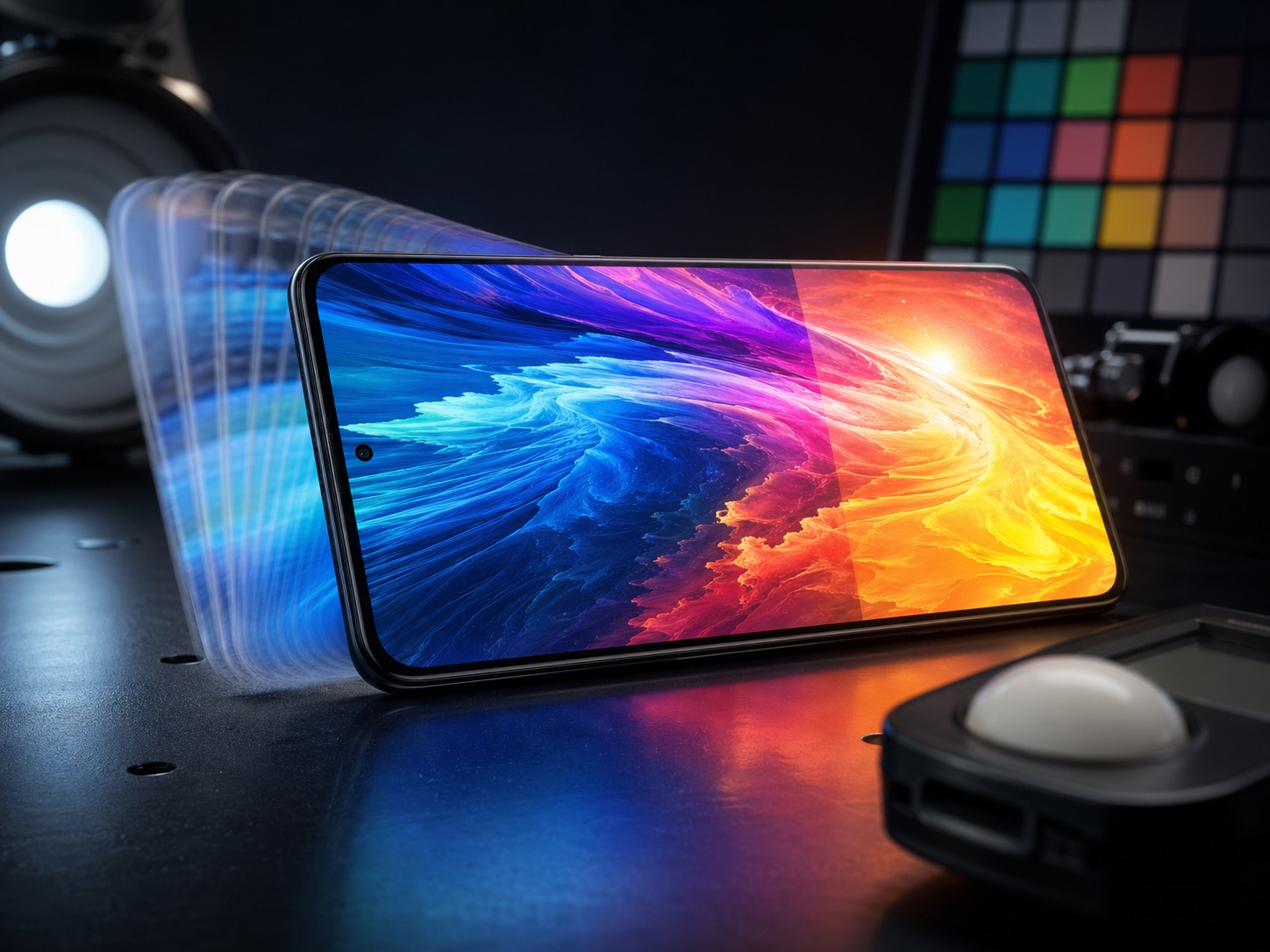
Phone marketing copy talks about displays the way wine labels talk about wine, lots of confident language, very little of it useful. Brands quote peak brightness numbers measured under conditions you'll never reproduce, and refresh rate "ranges" that mostly run at the bottom of the range.
Here are the five display specs that actually matter, what to ignore, and how to compare two phones honestly.
Refresh rate
What it is
How many times per second the display redraws. Higher = smoother scrolling, smoother games, less perceptible jitter when text is moving.
What to look for
- 60Hz: Old. Avoid in 2026 unless price is the only consideration.
- 90Hz: Acceptable. The jump from 60 to 90 is bigger than 90 to 120.
- 120Hz: The flagship default and the sweet spot.
- 144Hz / 165Hz: Diminishing returns. Mostly relevant for gaming phones.
What to ignore
"Adaptive 1-120Hz" or "LTPO 1-120Hz", these specs are real, but most apps don't trigger the full range. The phone will run at 90 or 120 for almost everything you do.
Peak brightness
What it is
How bright the display can get, measured in nits.
What to look for
Three numbers, in order of how much they matter:
- Typical brightness (300-600 nits), what you actually see most of the time
- High brightness mode (HBM) (800-1500 nits), outdoor sunlight readability
- Peak HDR brightness (1500-2500+ nits), only triggered for HDR content highlights
What to ignore
Headline numbers. A phone advertising "3000 nits peak" is quoting a 5% screen area for 0.2 seconds while playing HDR Dolby Vision content. Useful as a tie-breaker, useless as a daily-use spec.
Resolution and pixel density
What it is
Total pixels (e.g. 1080×2400) and pixels per inch (PPI).
What to look for
- 400+ PPI: Sharp enough that you won't see individual pixels at normal viewing distance.
- 500+ PPI: Overkill, but the marketing tier.
- Below 400 PPI: Visible pixelation, especially on text. Acceptable on cheap phones, not on flagships.
What to ignore
"2K" vs "FHD+" branding. Real differences are in PPI, not marketing labels. A 6.1-inch FHD+ screen has higher PPI than a 6.7-inch FHD+ screen.
Panel type
What it is
The physical technology behind the display.
What to look for
- AMOLED / OLED: Per-pixel lighting, true blacks, better contrast, better outdoor visibility. The right answer in 2026.
- LTPO AMOLED: AMOLED with adaptive refresh rate. Slightly better battery on flagships.
- IPS LCD: Cheaper, washed-out blacks, decent color accuracy. Acceptable on budget phones.
- TFT LCD: Avoid.
What to ignore
"Super AMOLED", "Dynamic AMOLED", "Fluid AMOLED", these are brand names for AMOLED. They tell you who manufactured the panel (usually Samsung Display), not whether it's better than another AMOLED.
HDR support
What it is
Whether the display can render High Dynamic Range content, wider color range, brighter highlights, deeper shadows.
What to look for
- HDR10: Baseline. Almost every modern phone has it.
- HDR10+: Adaptive metadata. Better, mostly Samsung-driven.
- Dolby Vision: Per-scene metadata. Best for streaming. Apple and a few high-end Android phones.
What to ignore
"HDR Vivid" and similar Chinese OEM HDR formats, they exist but no major streaming service uses them, so they're effectively decorative.
How to actually compare two phones
When two phones look similar on paper, compare in this order:
- Panel type, AMOLED beats LCD, full stop
- PPI, aim for 400+
- Typical brightness, not peak
- Refresh rate floor, many "120Hz" phones run at 60 most of the time
- HDR format, only matters if you stream
Everything else, bezels, peak brightness, whether the panel is "Samsung Display E7" or "BOE", is in tie-breaker territory.
We list all five of these clearly on every phone page, and the comparison tool stacks them side-by-side. No marketing fluff, just the numbers that change what you see.


